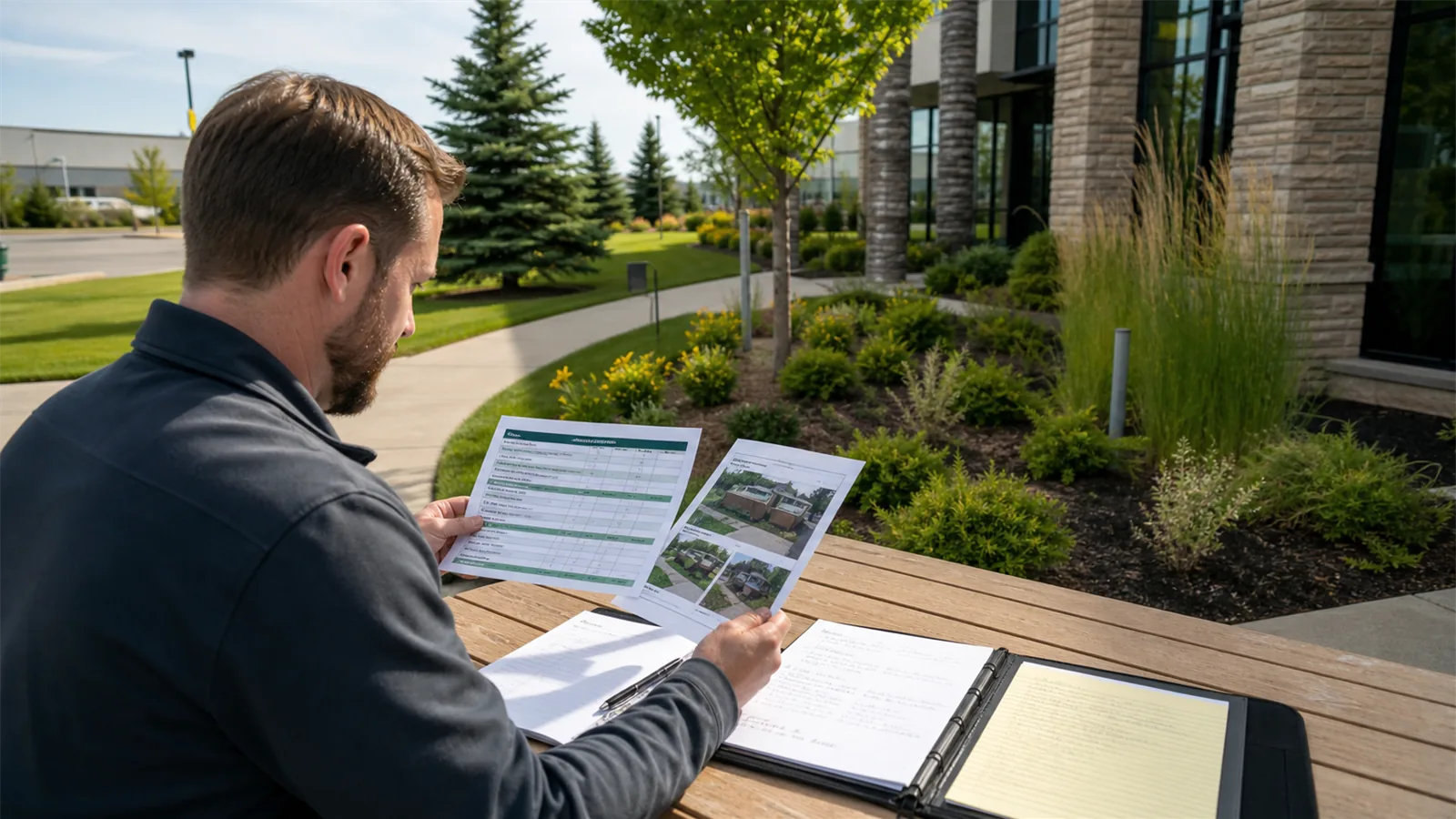
Define the service areas
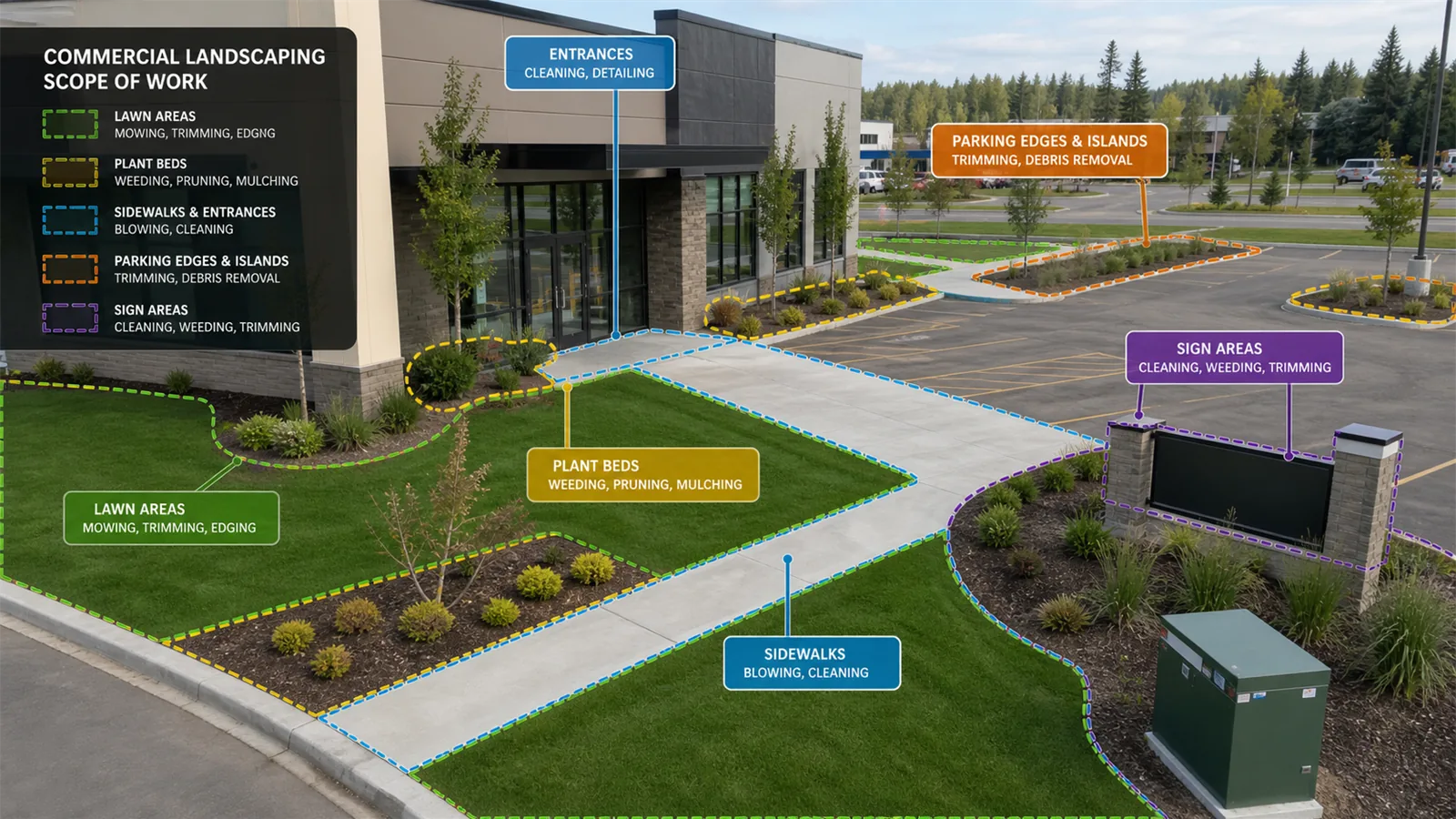
Start by naming the parts of the property included in the work. Lawns, beds, entrances, walkways, parking edges, signs, islands, garbage areas, and rear service zones may not all require the same level of attention.
- Included lawns, beds, entrances, sidewalks, signs, and parking edges
- Excluded or lower-priority zones that are not part of each visit
- Special areas such as garbage access, patios, loading zones, or tenant entrances
List the recurring maintenance tasks
Recurring scope should describe what happens on normal visits. Mowing, trimming, blowing, basic debris pickup, bed checks, weed attention, and site observations should be described in plain language.
- Mowing, trimming, blowing, edging, and basic cleanup expectations
- Bed, shrub, weed, mulch, and debris checks if included
- Frequency and finish standard for high-visibility areas

Separate seasonal and optional work
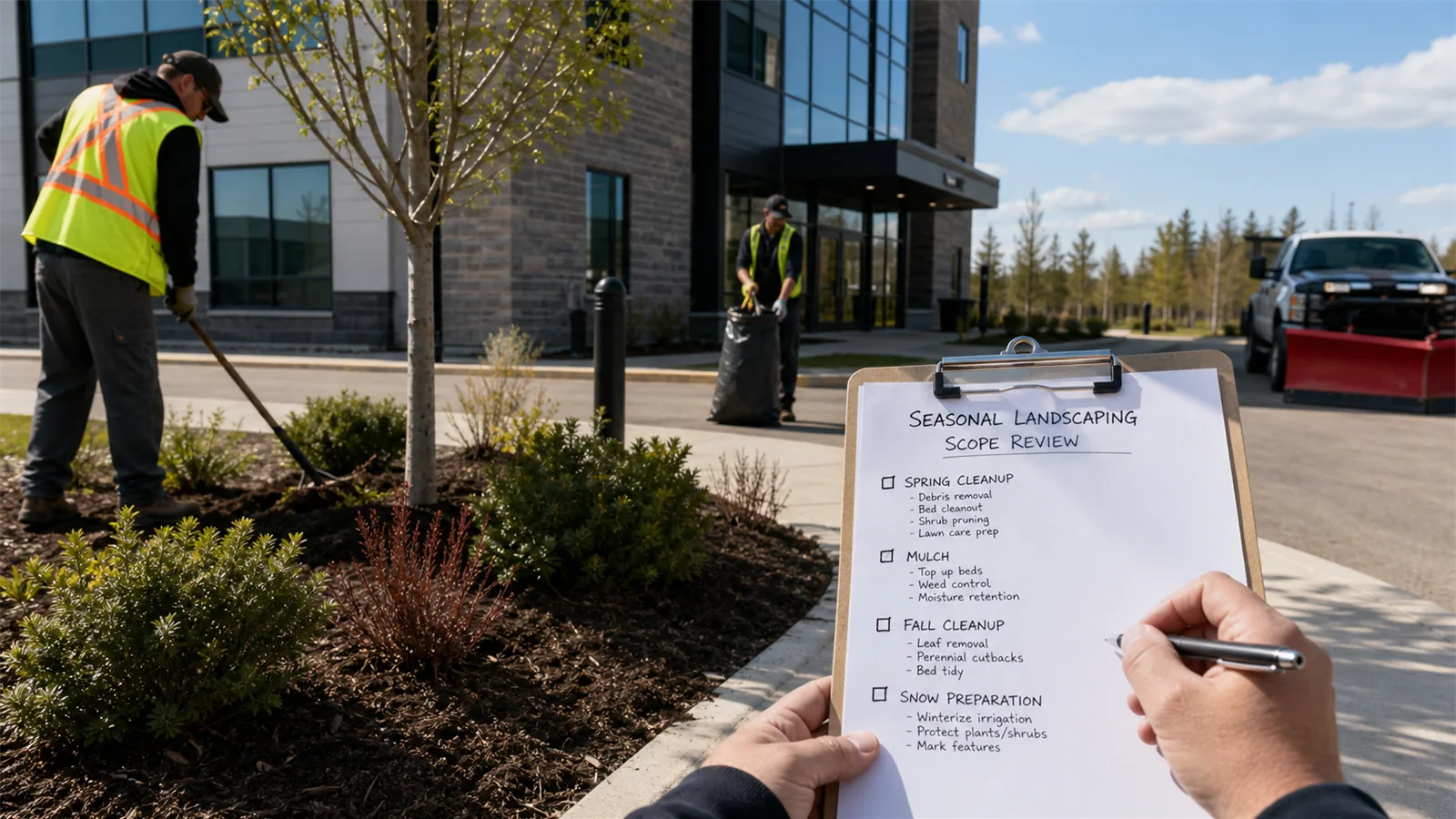
Spring cleanup, fall cleanup, mulch refreshes, shrub pruning, sod repair, gravel cleanup, and snow planning may be separate from weekly maintenance. The scope should say what is included and what needs approval.
- Spring cleanup, fall cleanup, mulch, pruning, sod, or bed refreshes
- Snow preparation, obstacle marking, and winter access planning
- Approval process for extras, one-time work, or changed site conditions
What changes the next step
The right next step depends on how much can be understood from the request. Photos, site notes, access details, service frequency, and the current condition of the property decide whether a quote can be prepared quickly or needs a walkthrough first.
Use that pass to connect the visible condition to timing, access, service frequency, and the kind of exterior maintenance LawnSharks should price.
Include communication and documentation expectations
A scope of work can also define how updates are handled. Property managers may want photos, notes, issue reporting, service confirmations, or review checkpoints through the season.
- Who receives updates, photos, issue notes, and service questions
- How damage, access problems, weather delays, or extra work are reported
- Review points for seasonal changes or recurring service quality
Send wide shots for layout and close photos for the detail areas mentioned in the guide.
Add timing, access, tenant, parking, gate, and seasonal constraints so the estimate reflects the real site.