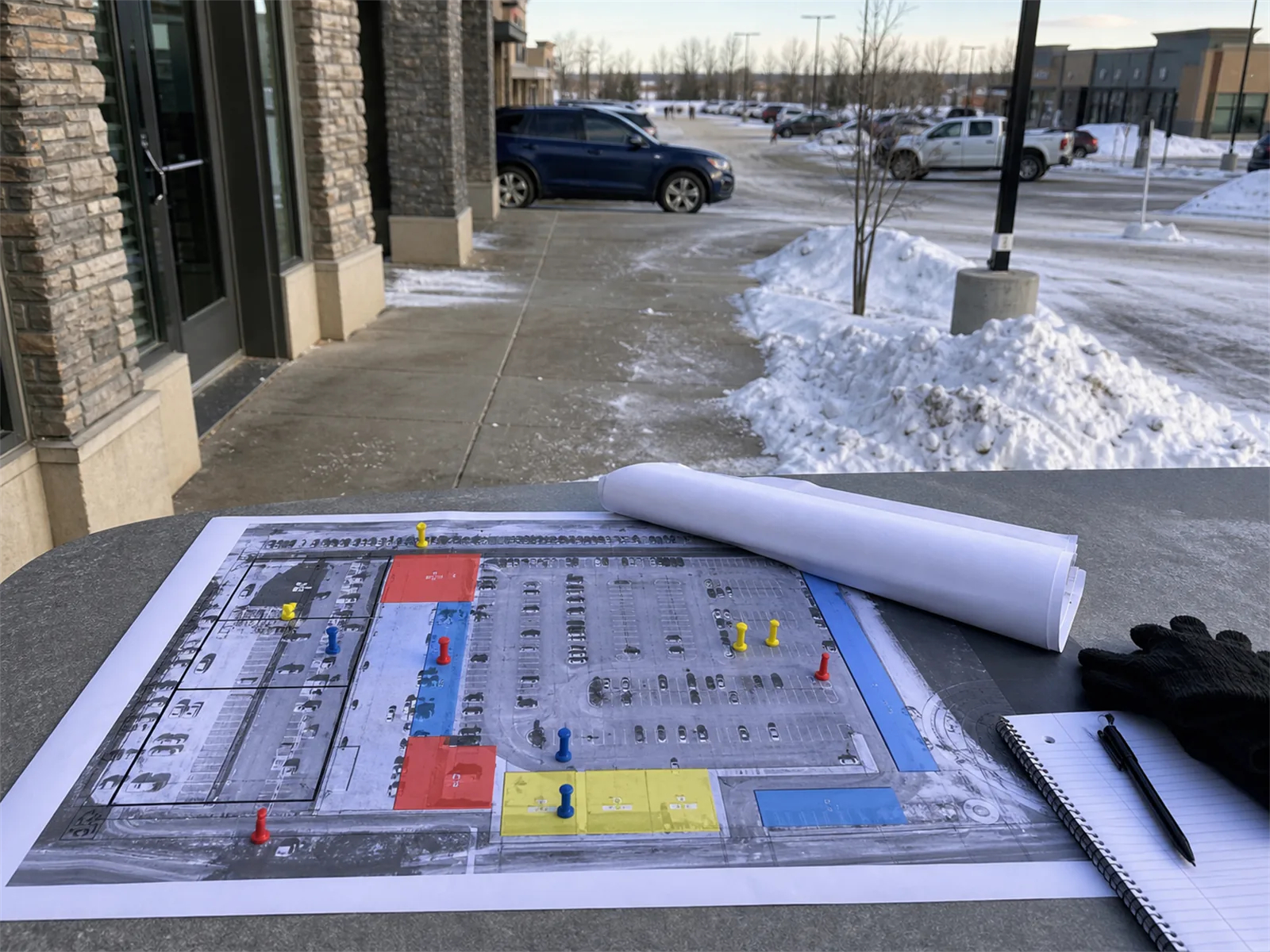
Spring: inspect, clean, and reset
Spring starts with snow melt, gravel, debris, salt damage, soft ground, and visible winter wear. The first goal is to make the property safe and presentable before regular mowing and bed maintenance begin.
- Remove winter debris, gravel, leaves, and litter from visible zones
- Check turf recovery, salt damage, drainage, beds, shrubs, and curbs
- Confirm mowing access and cleanup priorities before growth accelerates
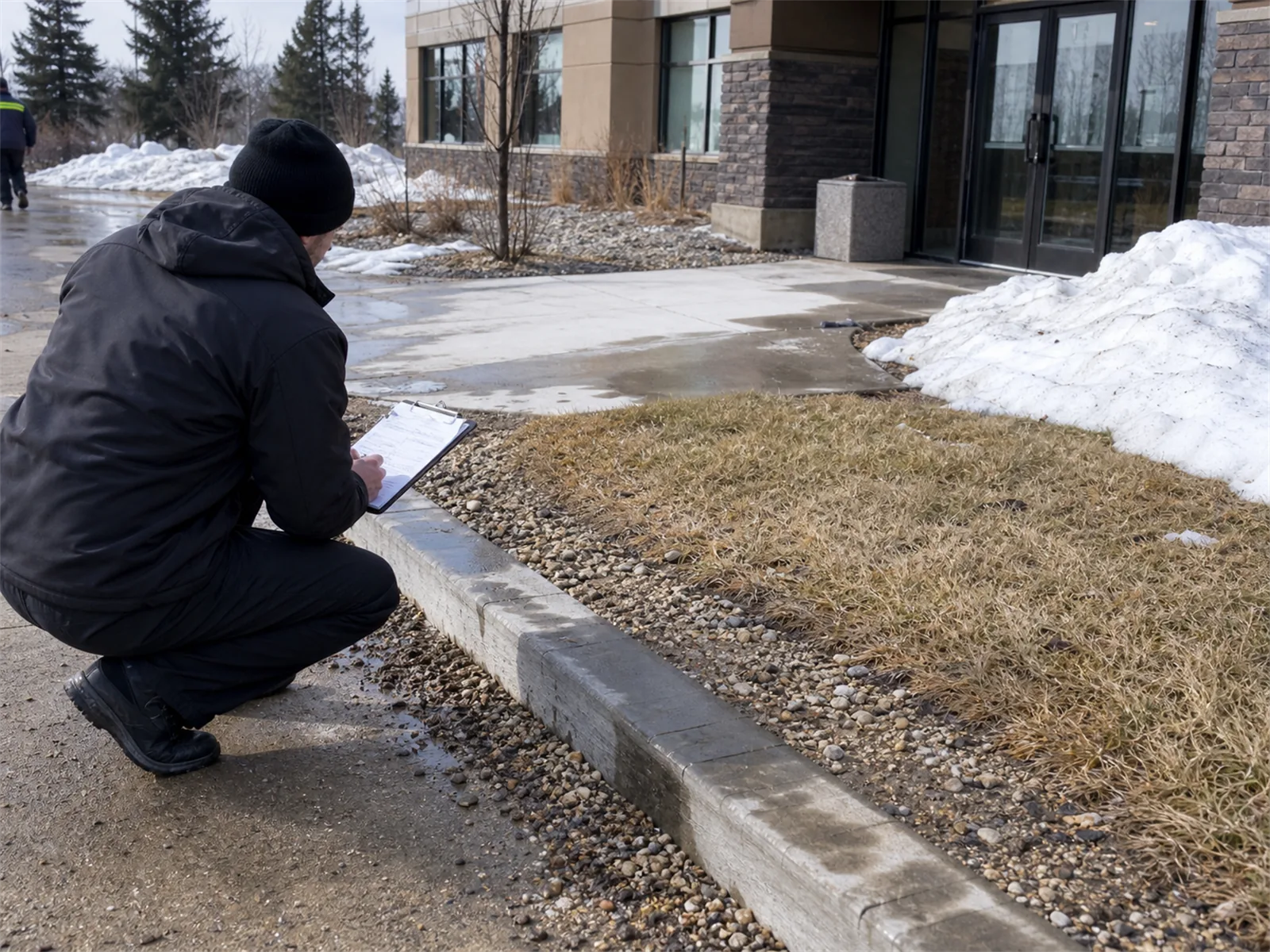
Summer: maintain curb appeal consistently
Summer is about keeping the property from sliding between visits. Mowing, trimming, blowing, weed attention, bed care, and entrance cleanup should match the visibility and traffic level of the site.
- Mowing and trimming around turf, signs, fences, curbs, and walkways
- Weed control attention along beds, cracks, gravel, and parking edges
- Blowing clippings and debris away from entrances, sidewalks, and storefronts
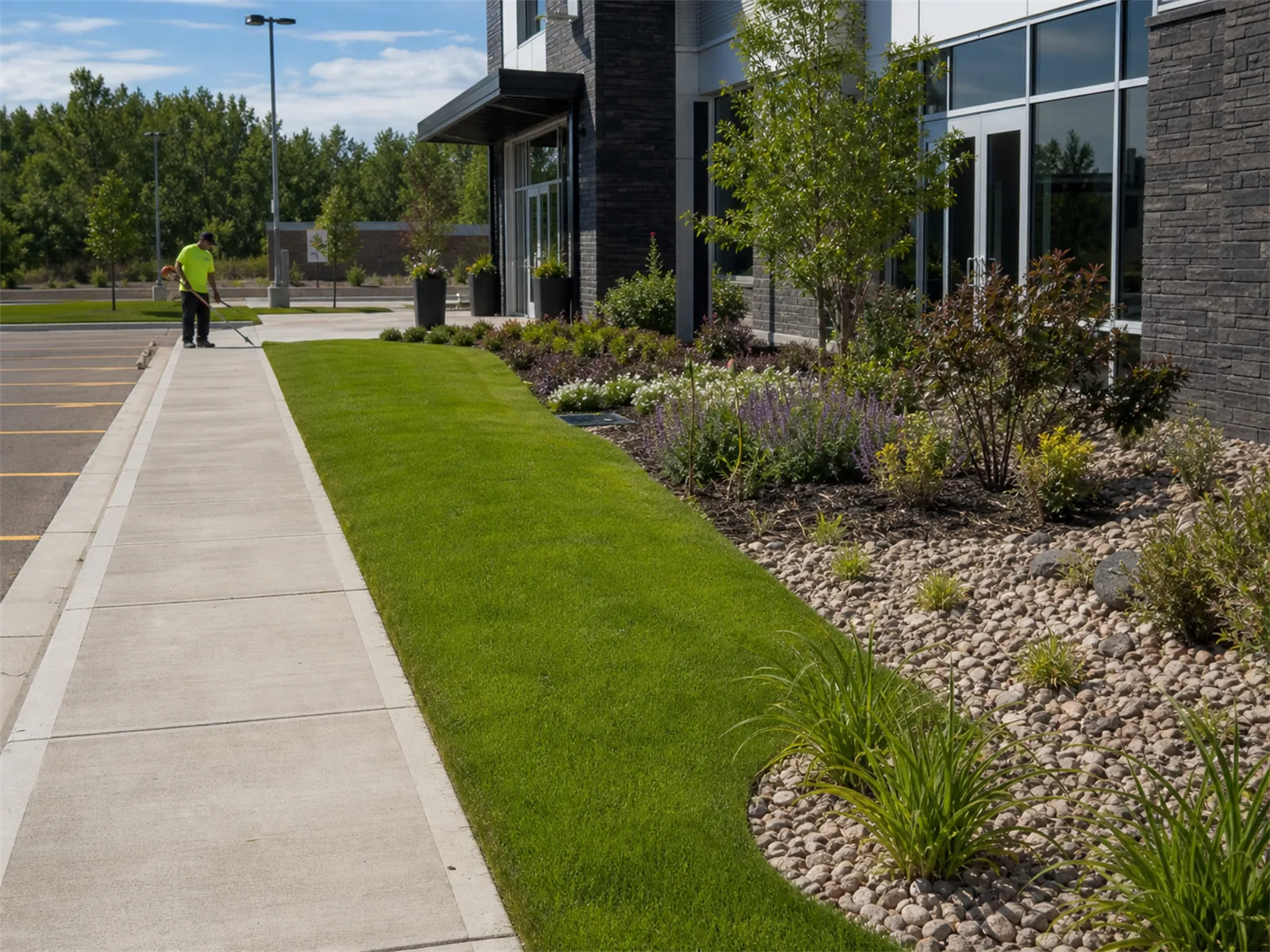
Fall: clean up before snow changes the site
Fall cleanup reduces mess, protects access, and helps snow work go smoother. Leaves, final mowing, bed clearing, debris removal, obstacle checks, and snow storage planning should happen before weather closes the window.
- Final mowing, leaf removal, bed clearing, and debris cleanup
- Move loose items and mark obstacles before snow arrives
- Review snow storage, drainage, entrances, and access routes
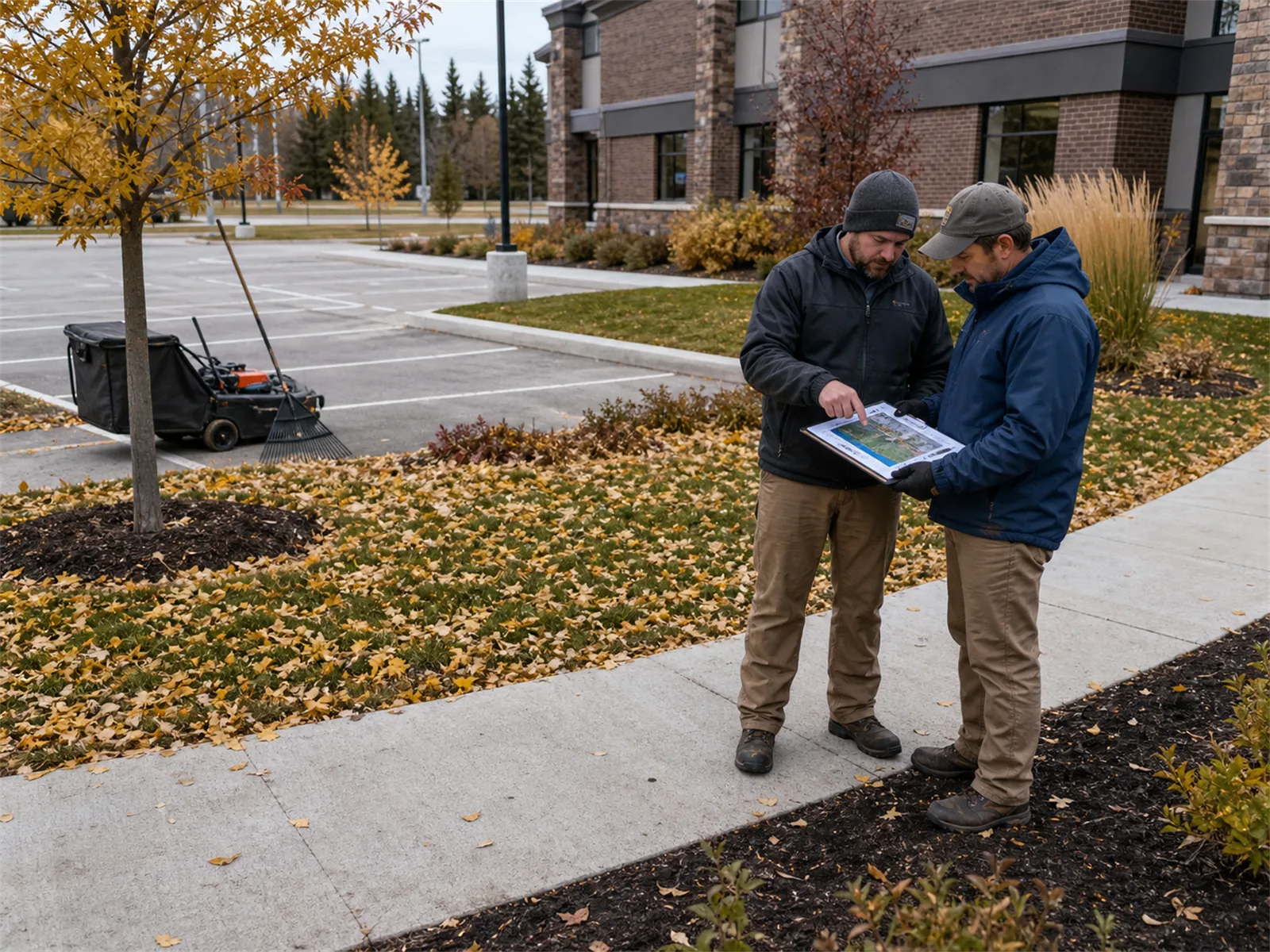
Why timing changes the result
Seasonal work is easier to plan when the site is reviewed before the rush. Snow melt, wet turf, gravel, leaves, frost, heat, and short booking windows can all change what should happen first.
Use that pass to connect the visible condition to timing, access, service frequency, and the kind of exterior maintenance LawnSharks should price.
Winter planning: keep access usable
The seasonal calendar should include winter access planning even if landscaping crews are not mowing. Snow routes, priority entrances, sidewalks, garbage access, loading areas, and ice-prone zones should be documented early.
- Priority clearing zones and trigger expectations
- Snow storage areas that avoid sightlines, drains, doors, and parking problems
- Contacts, communication process, and recurring winter issue areas
Send wide shots for layout and close photos for the detail areas mentioned in the guide.
Add timing, access, tenant, parking, gate, and seasonal constraints so the estimate reflects the real site.