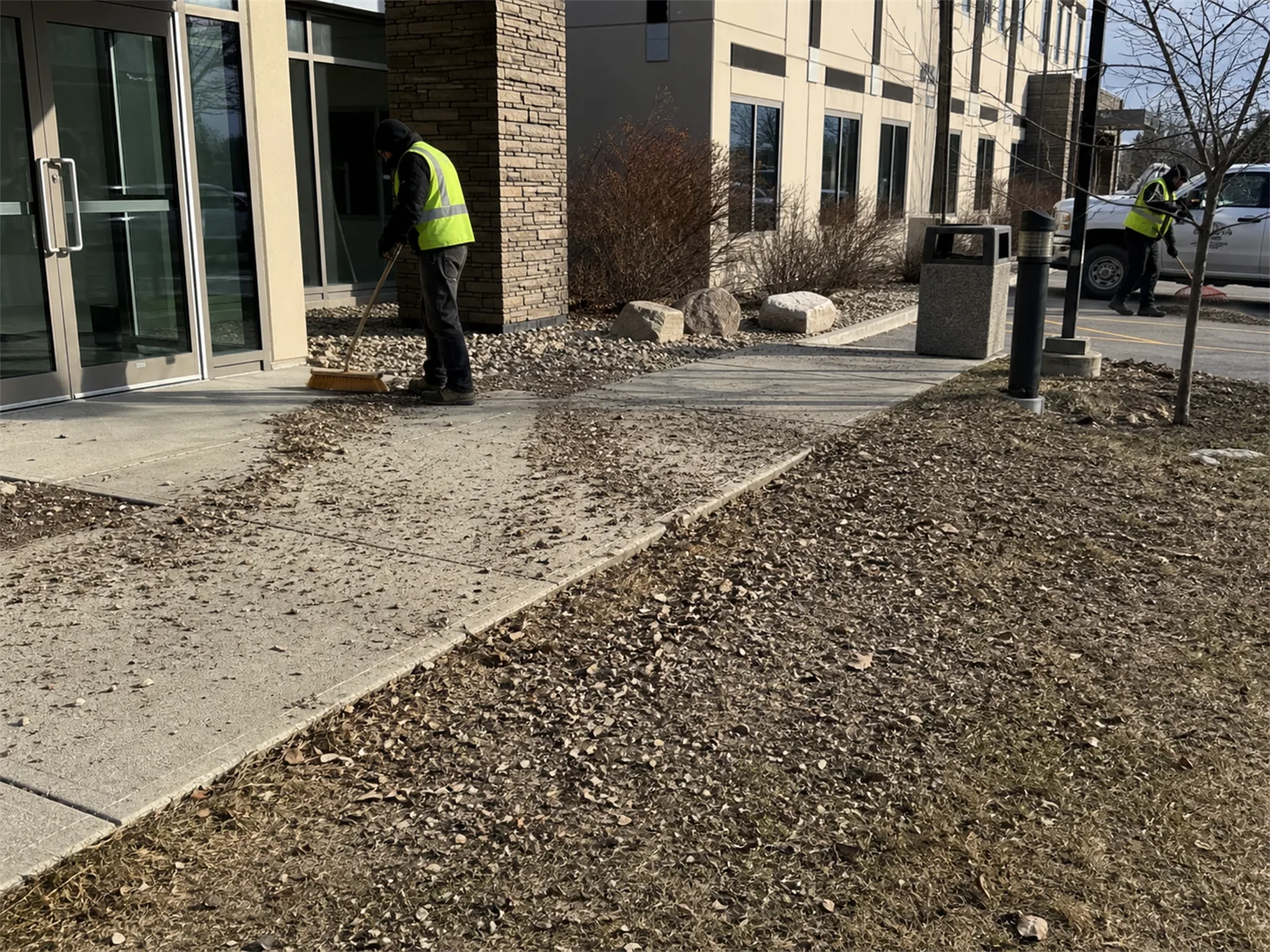
Clear winter debris and gravel first
Spring cleanup usually starts with the mess winter leaves behind. Gravel, litter, leaves, branches, plow debris, and blown material should be removed from entrances, lawns, beds, walkways, and high-visibility parking edges.
- Gravel and debris along turf, curbs, sidewalks, and entrances
- Leaves, branches, garbage, and winter buildup in beds or corners
- Walkway and storefront cleanup before customer traffic increases
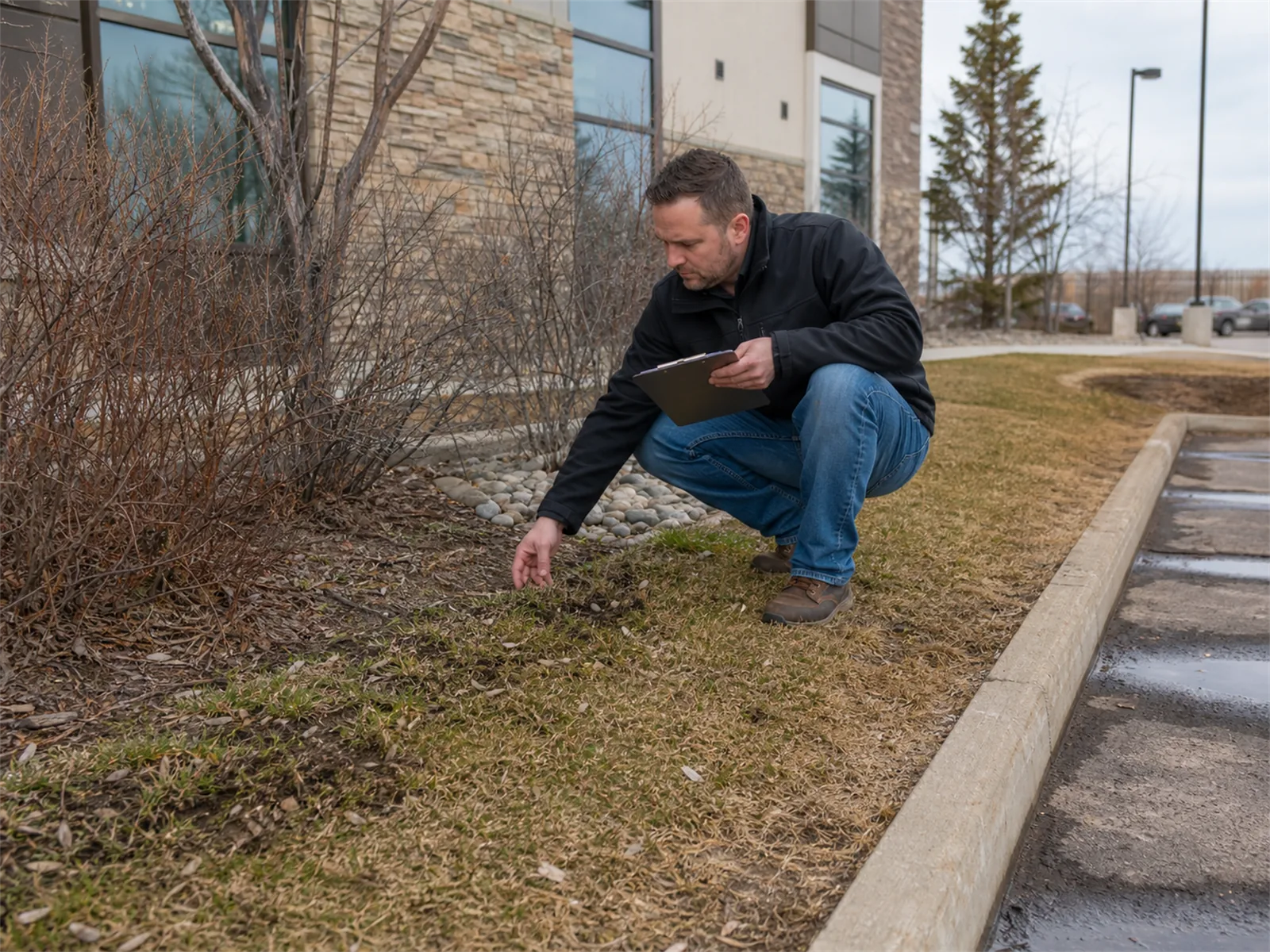
Inspect turf, beds, shrubs, and drainage
After the surface mess is removed, inspect the property for damage. Salt, snow storage, standing water, plow activity, compacted snow, and heavy foot traffic can leave turf, beds, shrubs, and edges needing attention.
- Salt damage, patchy turf, dead grass, and compacted areas
- Beds, shrubs, mulch, and plant material affected by winter exposure
- Drainage problems, soft ground, erosion, and ice-prone locations
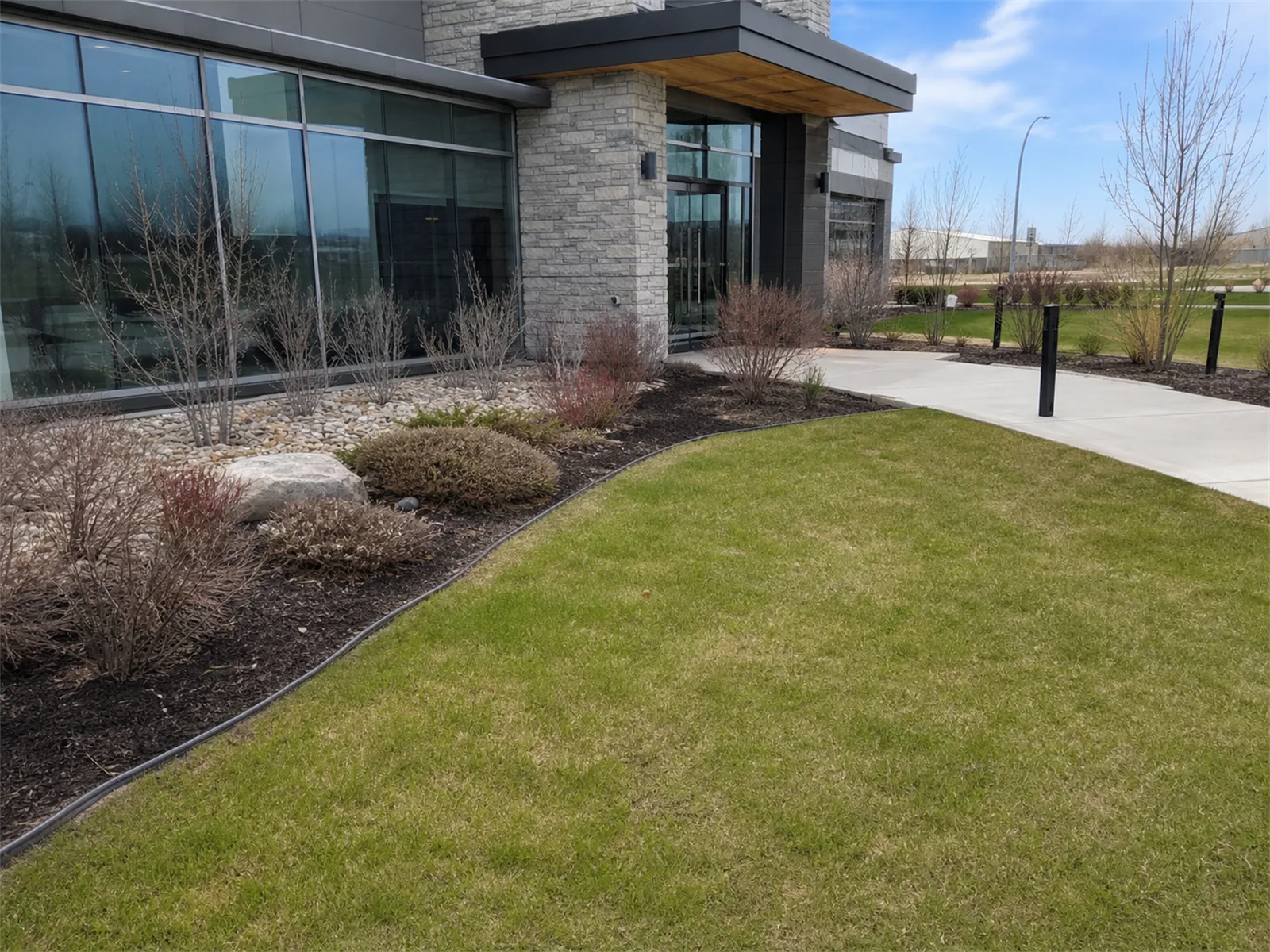
Reset presentation before mowing season
Once cleanup and inspection are complete, the property can be shaped for summer service. Edging, bed cleanup, first trim work, shrub attention, and problem-zone notes help regular maintenance start from a cleaner baseline.
- Bed cleanup, edging, trimming, and first service priorities
- Entrance and sign visibility improvements
- Notes for mowing, weed attention, and recurring site checks
Why timing changes the result
Seasonal work is easier to plan when the site is reviewed before the rush. Snow melt, wet turf, gravel, leaves, frost, heat, and short booking windows can all change what should happen first.
Use that pass to connect the visible condition to timing, access, service frequency, and the kind of exterior maintenance LawnSharks should price.
What to send for a spring cleanup estimate
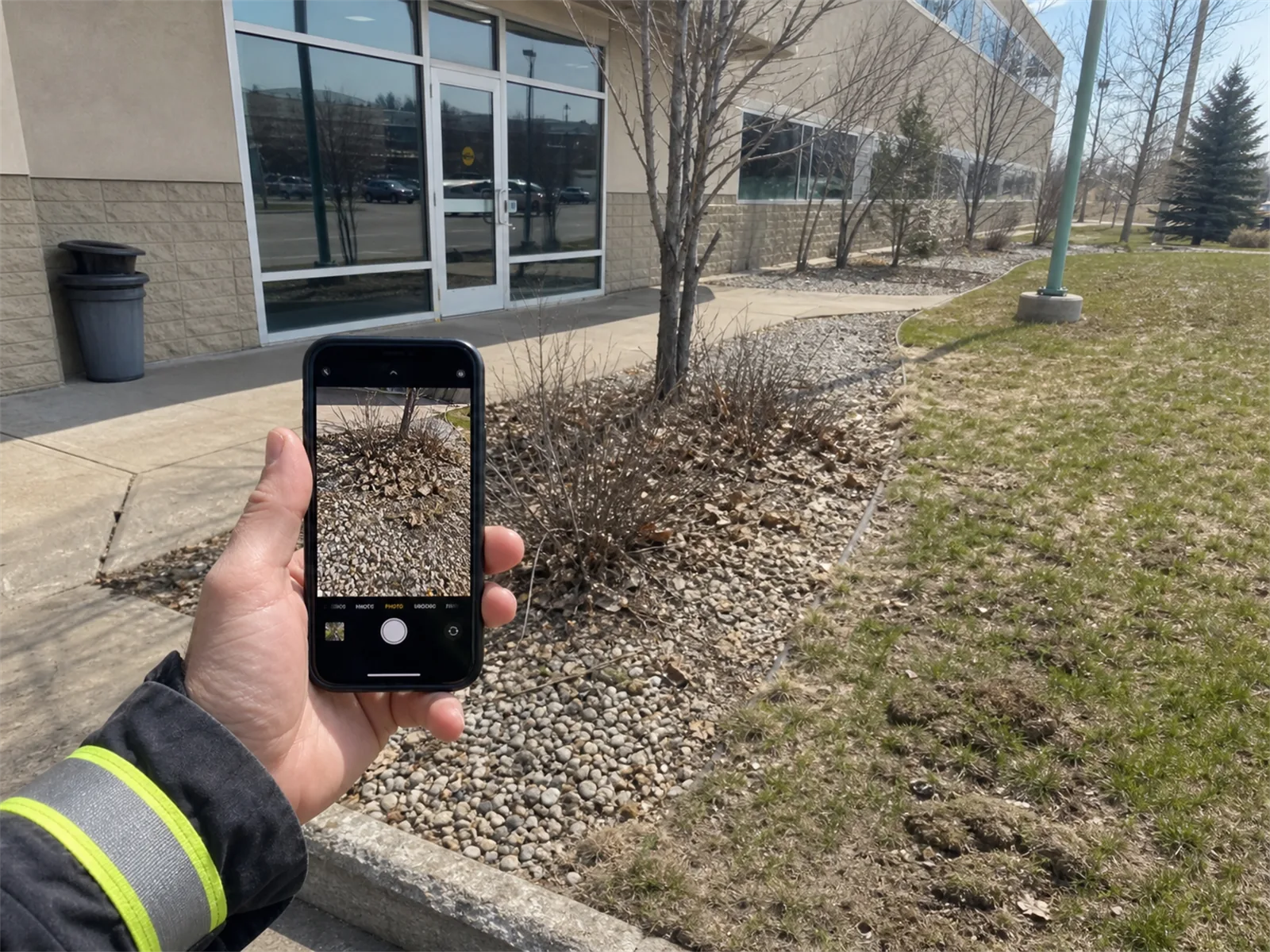
Photos help show the cleanup level before a site visit. Include wide views, closeups of gravel and debris, turf or bed damage, entrances, parking edges, and any access restrictions that affect equipment or crew timing.
- Wide site photos plus closeups of debris, gravel, turf, and beds
- Timing needs, tenant concerns, business hours, and access notes
- Known damage, drainage, or recurring spring problem areas
Send wide shots for layout and close photos for the detail areas mentioned in the guide.
Add timing, access, tenant, parking, gate, and seasonal constraints so the estimate reflects the real site.