Define what managed should look like
A managed property should look intentional between service visits. That standard depends on clean entrances, maintained turf, trimmed edges, tidy beds, clear walkways, and prompt attention to visible issues before they become complaints.
- Clean entrances, walkways, storefronts, and shared access areas
- Consistent mowing, trimming, blowing, bed care, and debris pickup
- Clear standards for what crews finish on every recurring visit
Match service frequency to property pressure
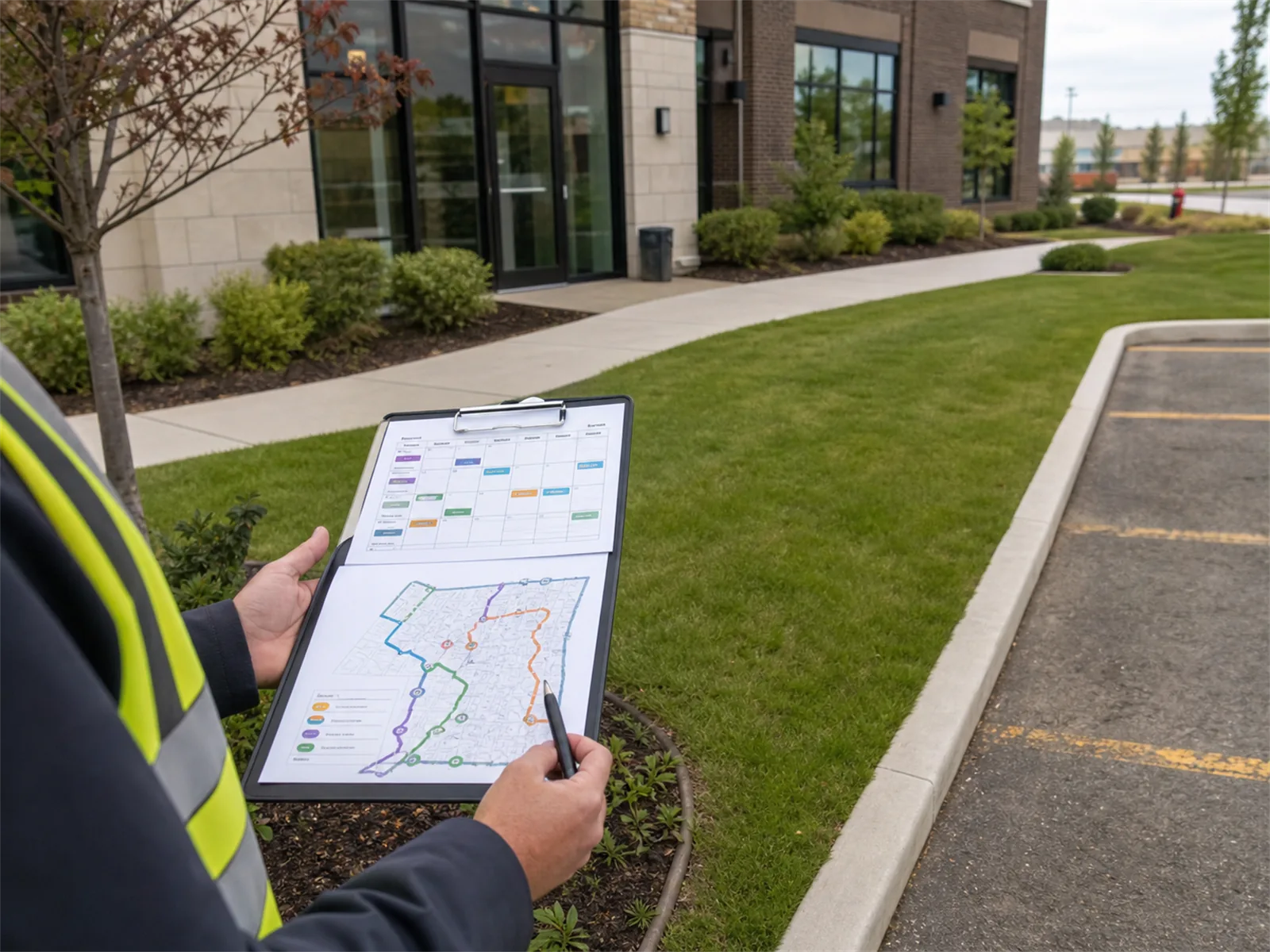
The right schedule depends on visibility, tenant traffic, growth rate, budget, and the tolerance for weeds, grass height, debris, or messy edges. High-traffic commercial sites usually need more frequent review than low-visibility properties.
- Weekly or biweekly mowing and trimming expectations
- High-traffic entrances, retail frontage, and tenant complaint patterns
- Seasonal adjustments for spring growth, summer heat, and fall cleanup
Set communication and reporting expectations
Commercial landscaping works better when everyone knows who to contact, what gets reported, and how issues are documented. Property managers often need photos, notes, or quick updates when crews find damage, access problems, or scope changes.
- Primary contact, backup contact, and approval process
- Photo updates for completed work or problem areas
- Issue reporting for damage, access restrictions, drainage, weeds, or cleanup extras
What to look at before you book
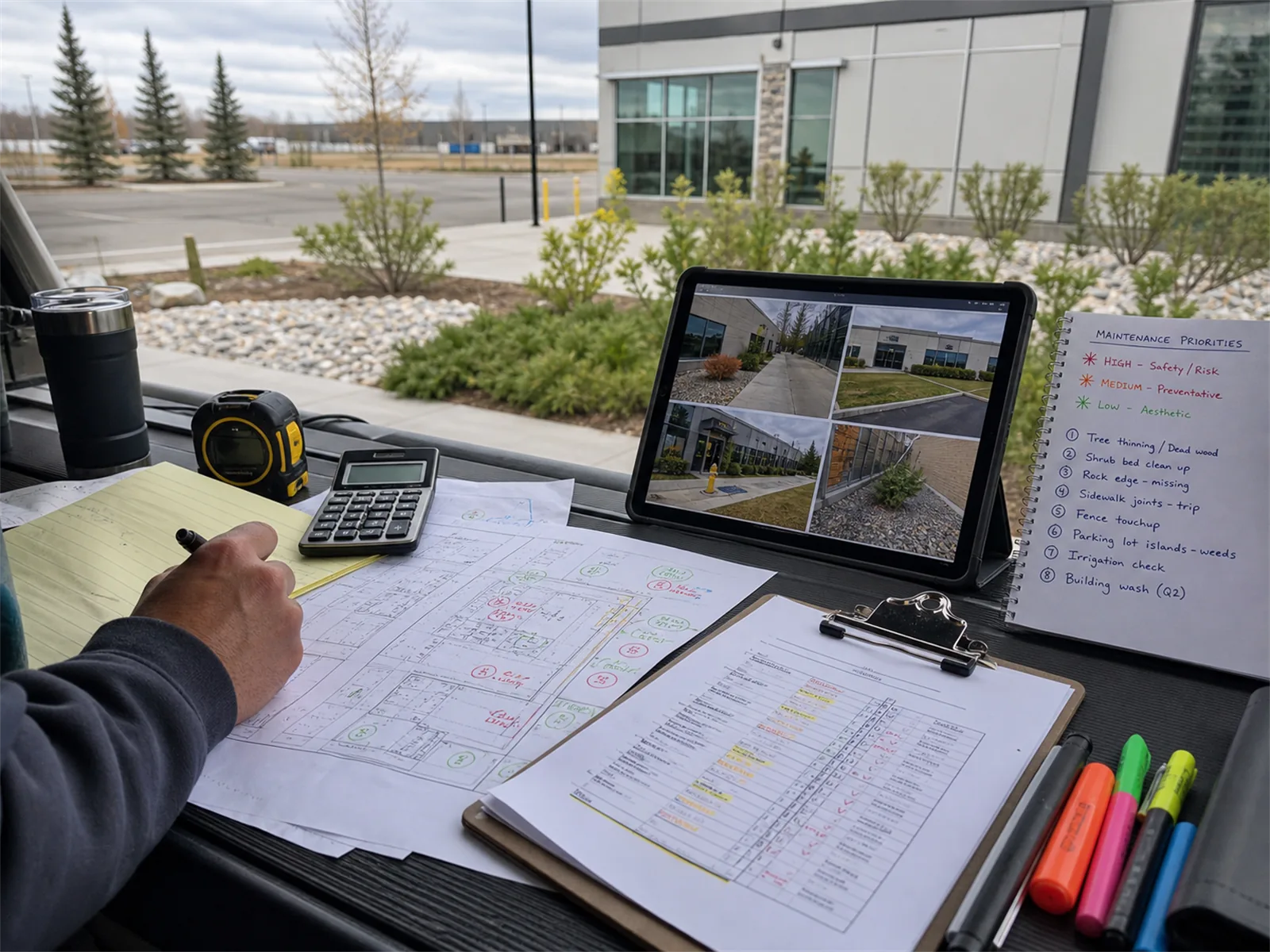
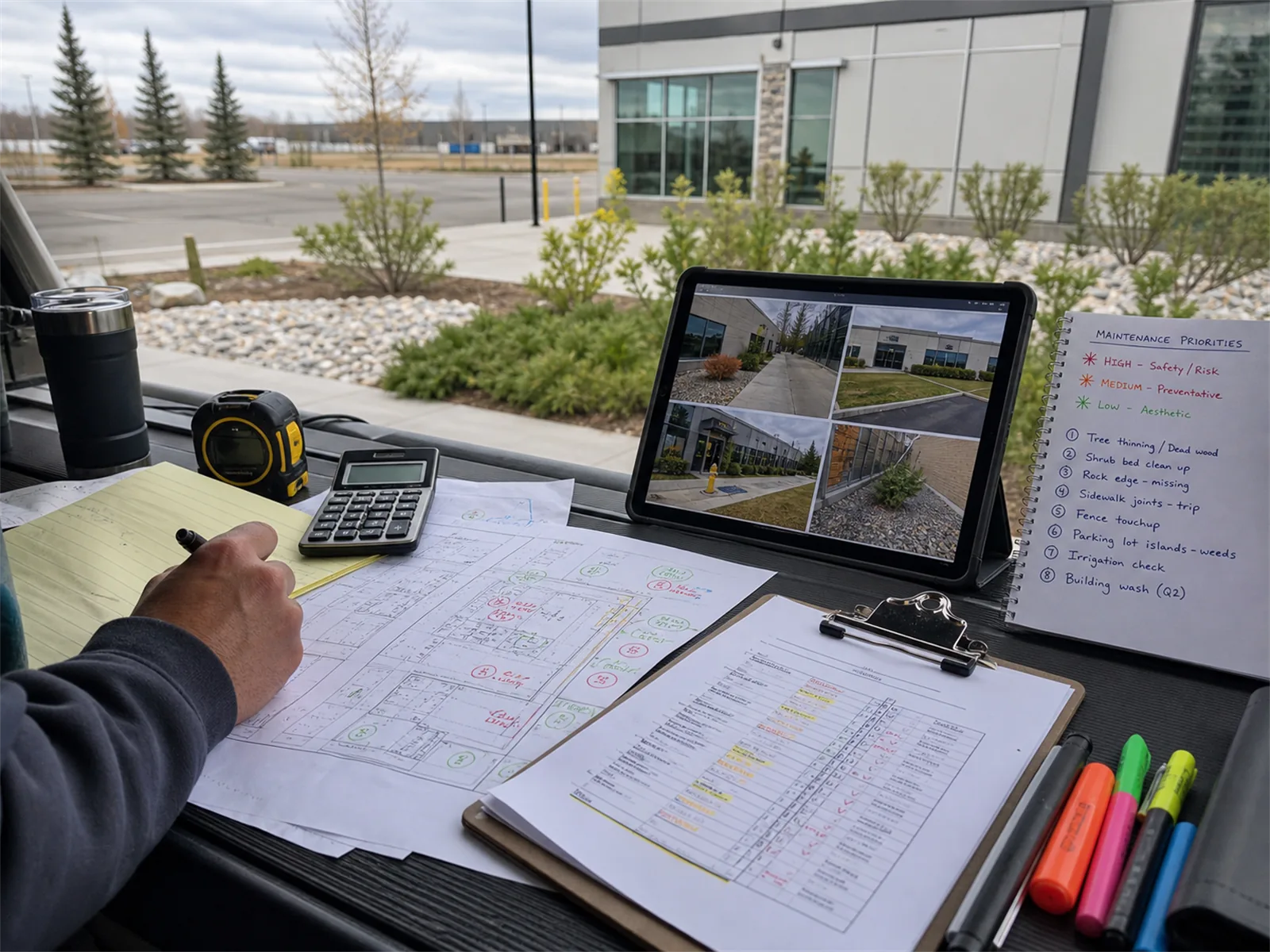
Before this turns into a quote request, walk the site the same way a tenant, customer, employee, or crew member would use it. The useful details are often practical: where people enter, where vehicles stack up, where snow or debris collects, and which areas look neglected first.
Use that pass to connect the visible condition to timing, access, service frequency, and the kind of exterior maintenance LawnSharks should price.
Plan landscaping around the full year
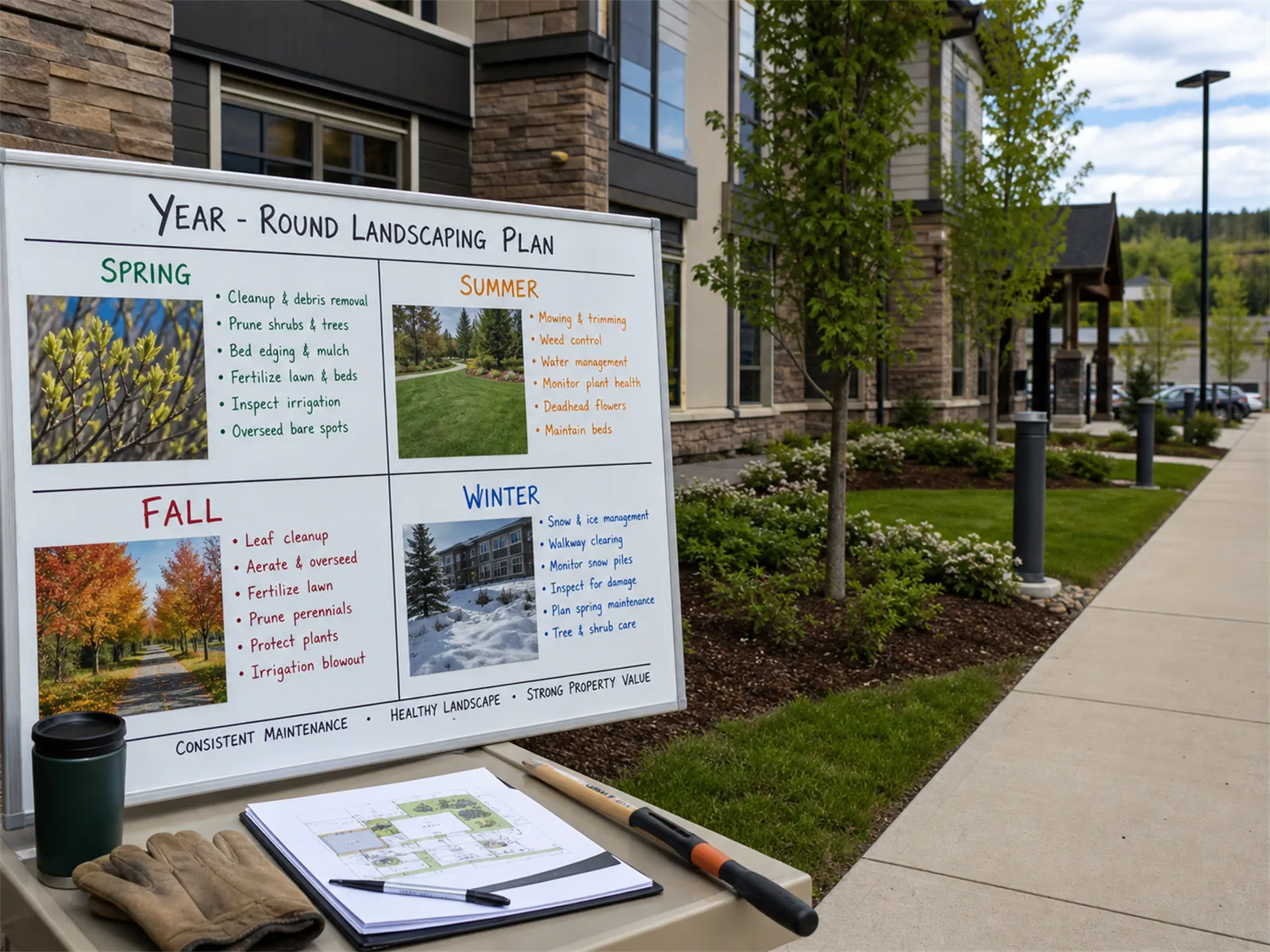
In Fort McMurray, landscaping planning should connect spring cleanup, summer maintenance, fall cleanup, and winter access. A year-round view helps avoid last-minute seasonal work and keeps the property easier to maintain.
- Spring cleanup and gravel recovery before regular mowing
- Summer service checks for weeds, dry spots, beds, and curb appeal
- Fall cleanup and snow access prep before winter conditions arrive
Send wide shots for layout and close photos for the detail areas mentioned in the guide.
Add timing, access, tenant, parking, gate, and seasonal constraints so the estimate reflects the real site.