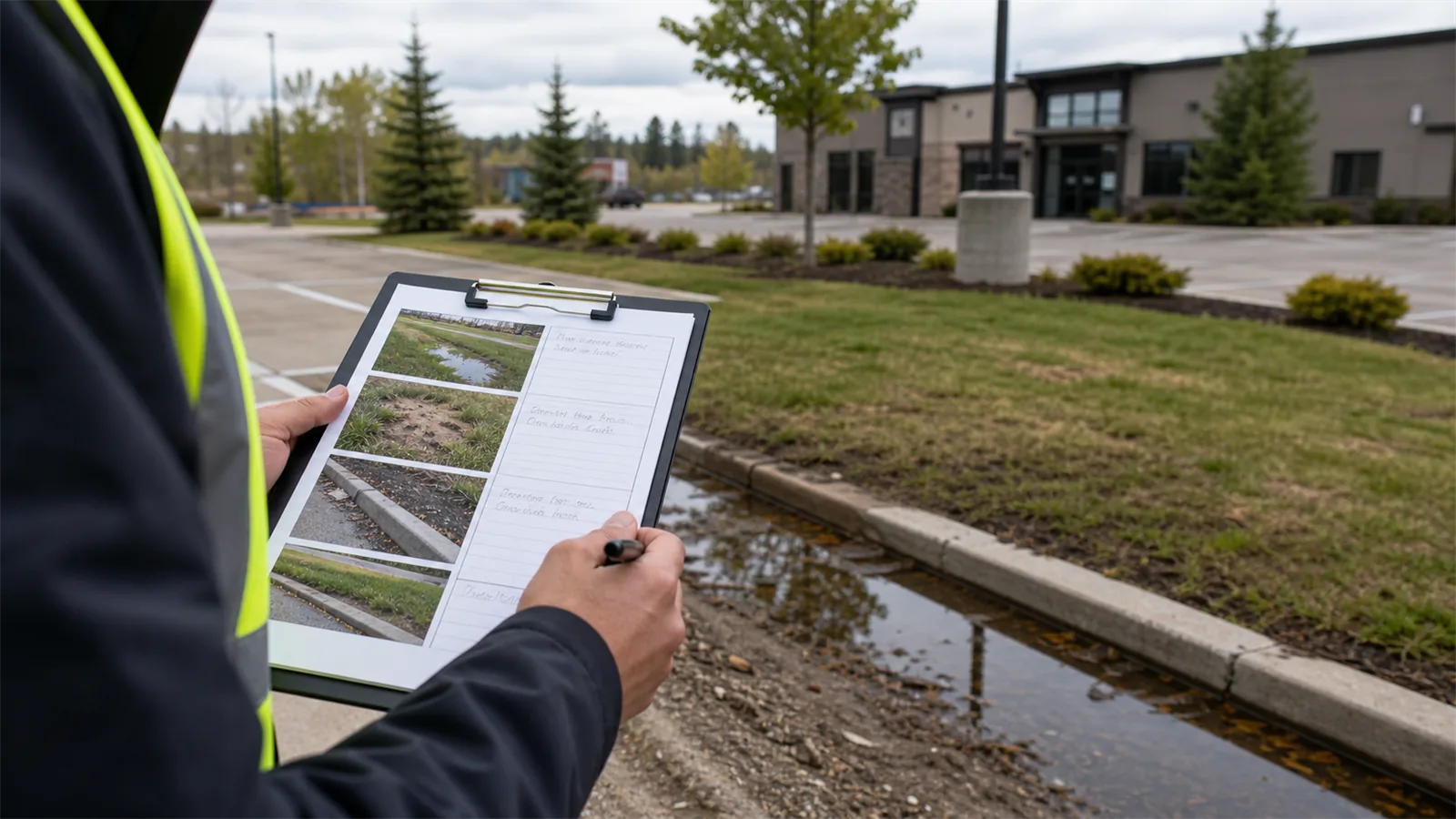
Clear scope before the first visit
The contractor should define what is included, what is excluded, and what counts as extra work. This protects the property manager from vague expectations and helps crews focus on the areas that matter most.
- Included mowing, trimming, blowing, cleanup, beds, shrubs, or inspection tasks
- Excluded areas, optional extras, and seasonal work that needs separate approval
- Site map or notes for priority entrances, walkways, and problem zones
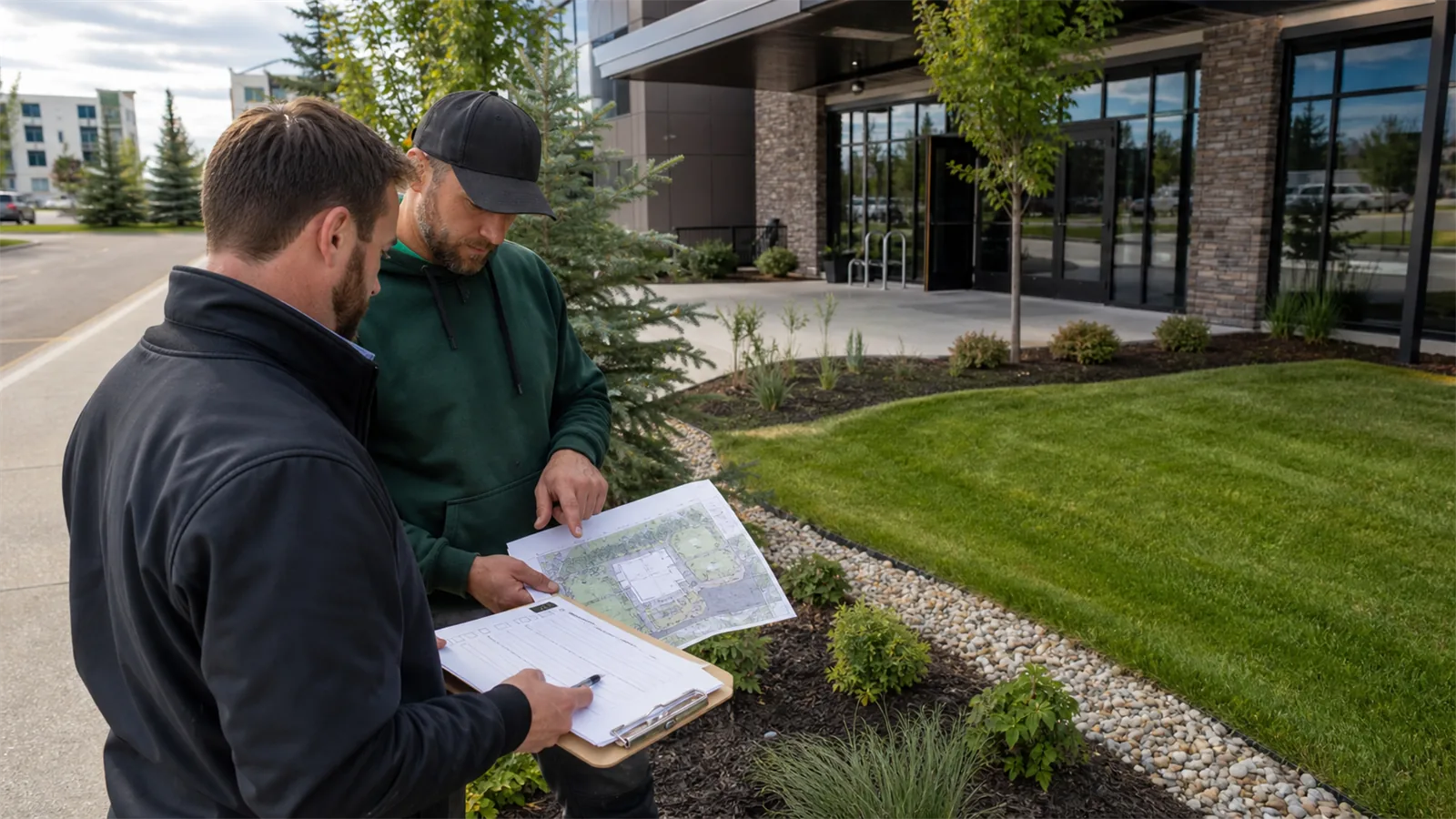
Reliable scheduling and communication
Property managers need to know when work is expected, how weather affects service, and who to contact if priorities change. Good communication is especially important during spring rush, fall cleanup, and winter planning.
- Expected service rhythm and weather-delay communication
- Primary contact for scope changes, access issues, and urgent concerns
- Advance notice for seasonal cleanup, site walks, or schedule changes
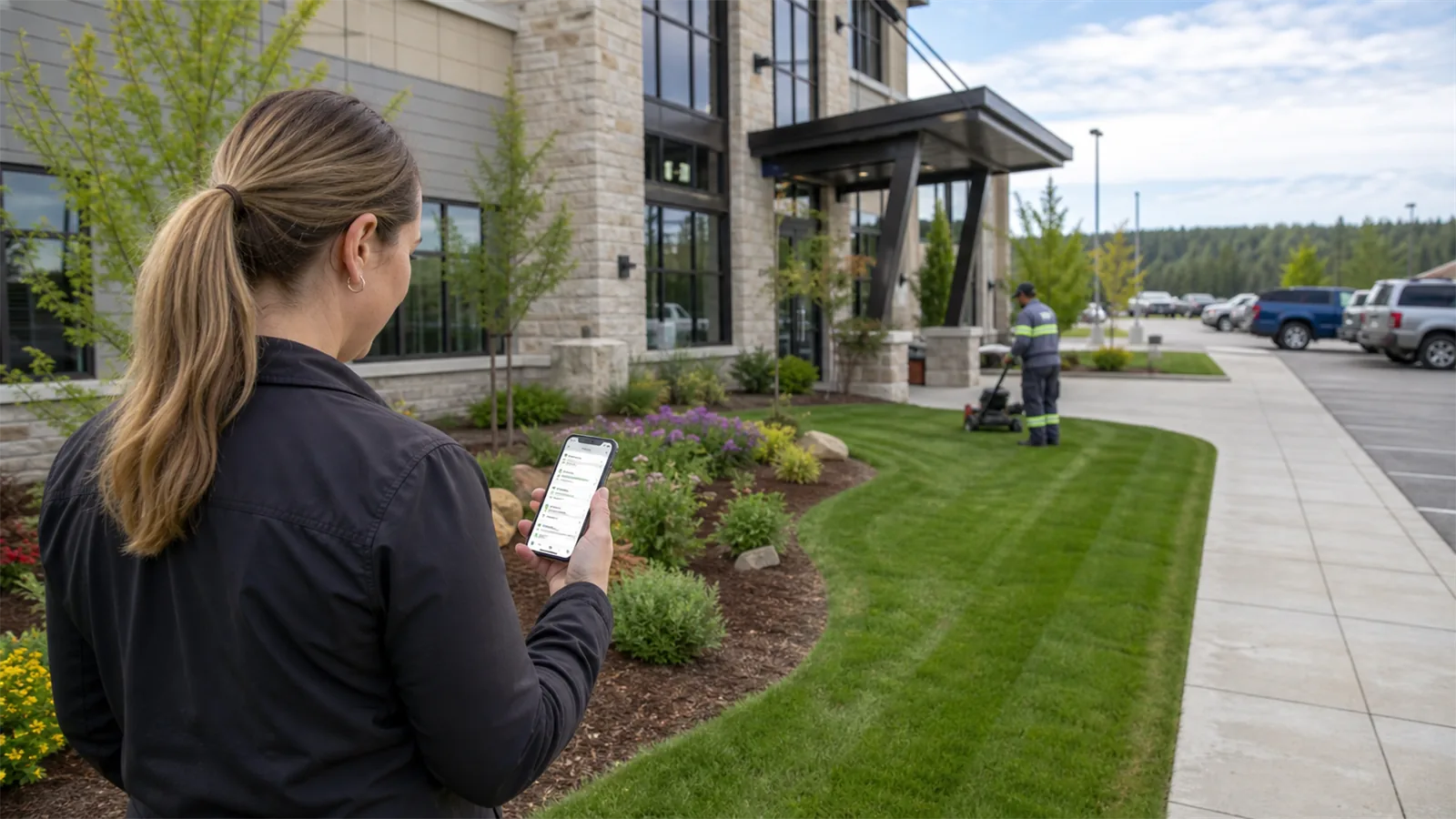
Consistent finishing standards
A commercial contractor should not leave the property half-finished. Grass height, trimming, blowing, cleanup, bed edges, and entrance appearance should be consistent enough that the site looks managed between visits.
- Trimmed edges around sidewalks, signs, curbs, fences, and beds
- Clippings and debris blown off walkways, entrances, and parking areas
- Visible standards for tenant-facing and customer-facing zones
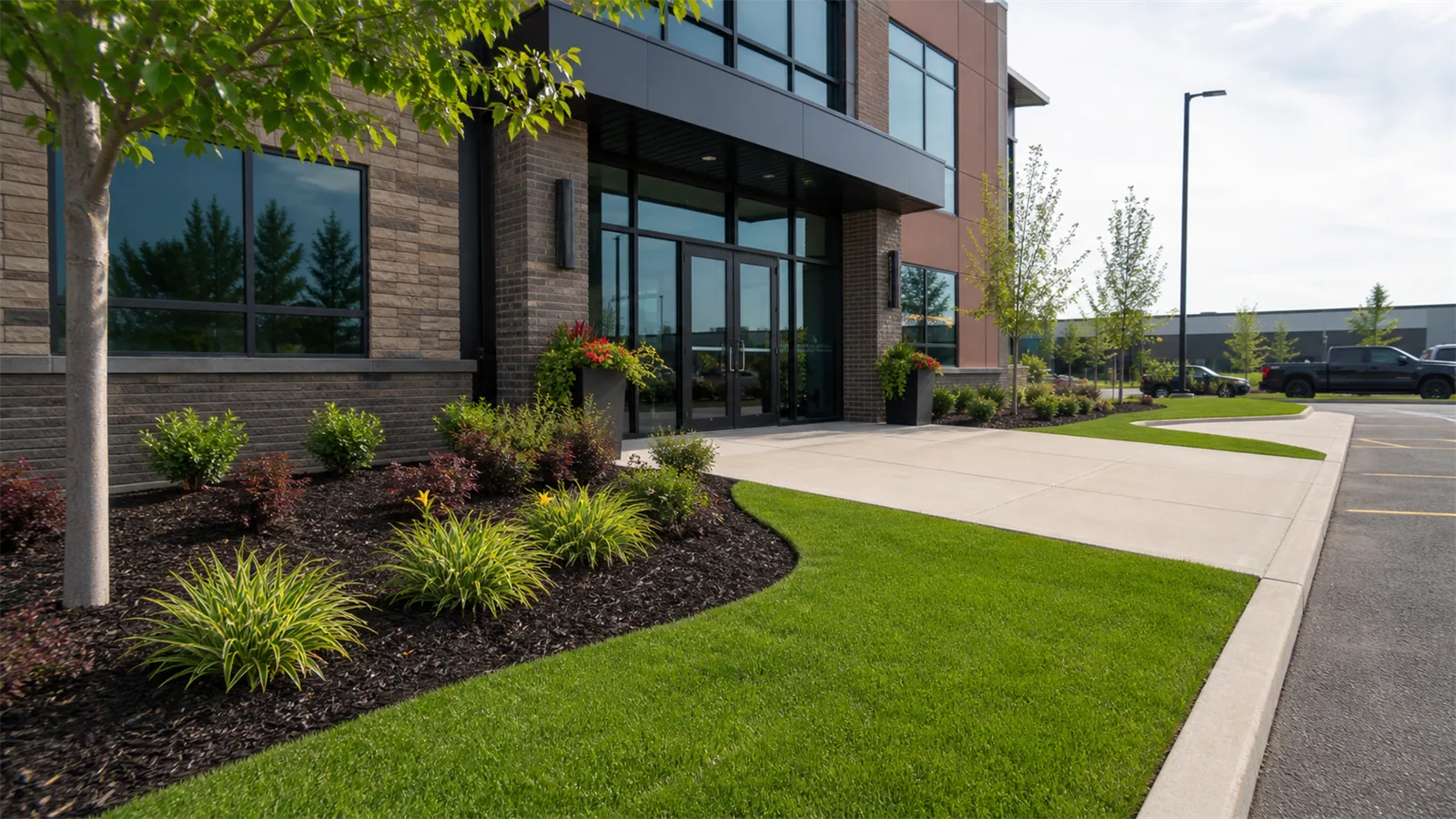
What to look at before you book
Before this turns into a quote request, walk the site the same way a tenant, customer, employee, or crew member would use it. The useful details are often practical: where people enter, where vehicles stack up, where snow or debris collects, and which areas look neglected first.
Use that pass to connect the visible condition to timing, access, service frequency, and the kind of exterior maintenance LawnSharks should price.
Issue reporting instead of silent surprises
Crews may notice drainage issues, damage, access problems, weed pressure, broken edges, or cleanup needs before the office does. A professional contractor reports those issues instead of letting them become bigger complaints.
- Photos or notes for damage, hazards, access problems, or recurring issues
- Recommendations for cleanup, repair, seasonal work, or added service areas
- Documentation that helps property managers explain next steps internally
Send wide shots for layout and close photos for the detail areas mentioned in the guide.
Add timing, access, tenant, parking, gate, and seasonal constraints so the estimate reflects the real site.