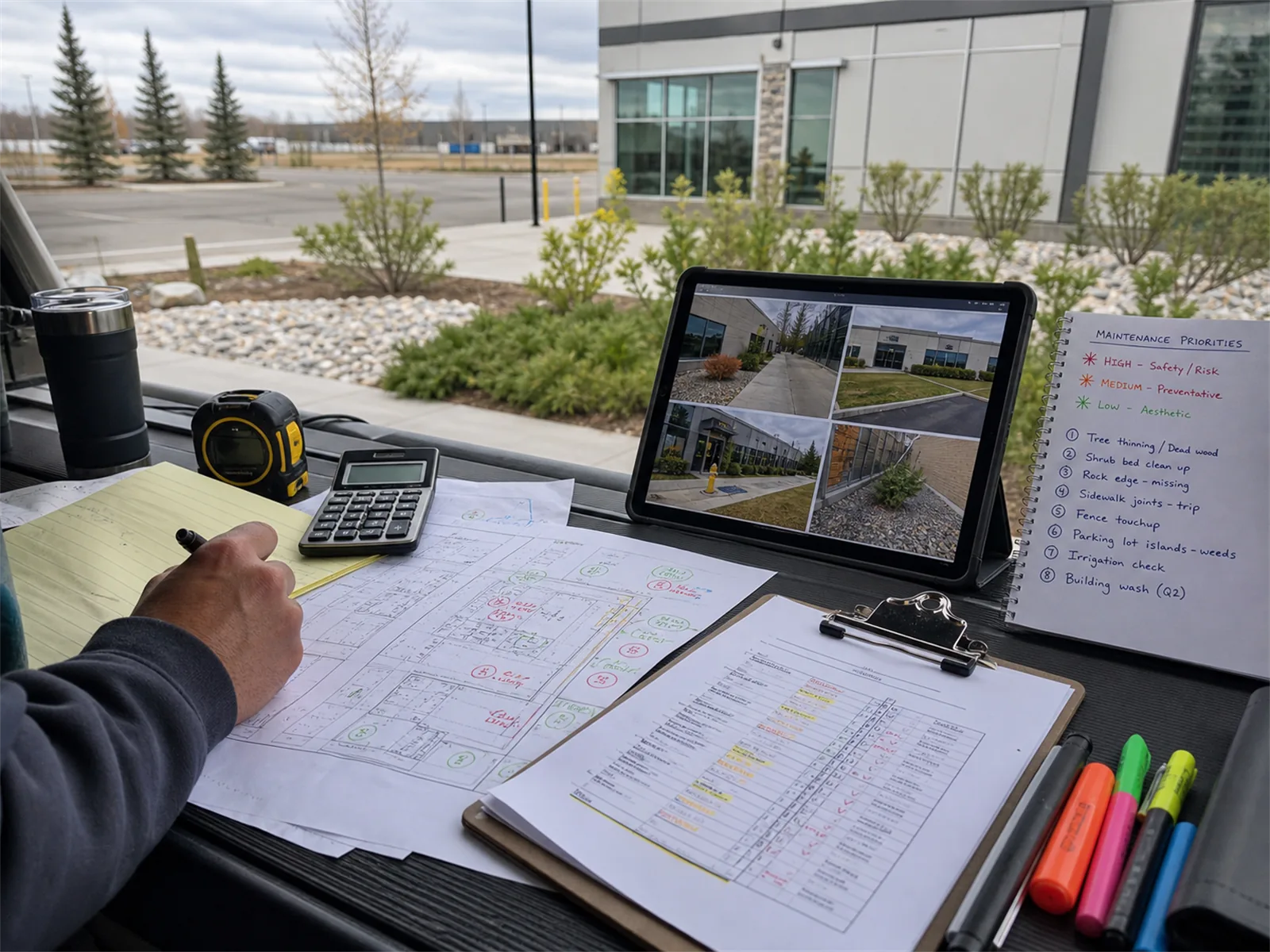
Start with the high-visibility zones
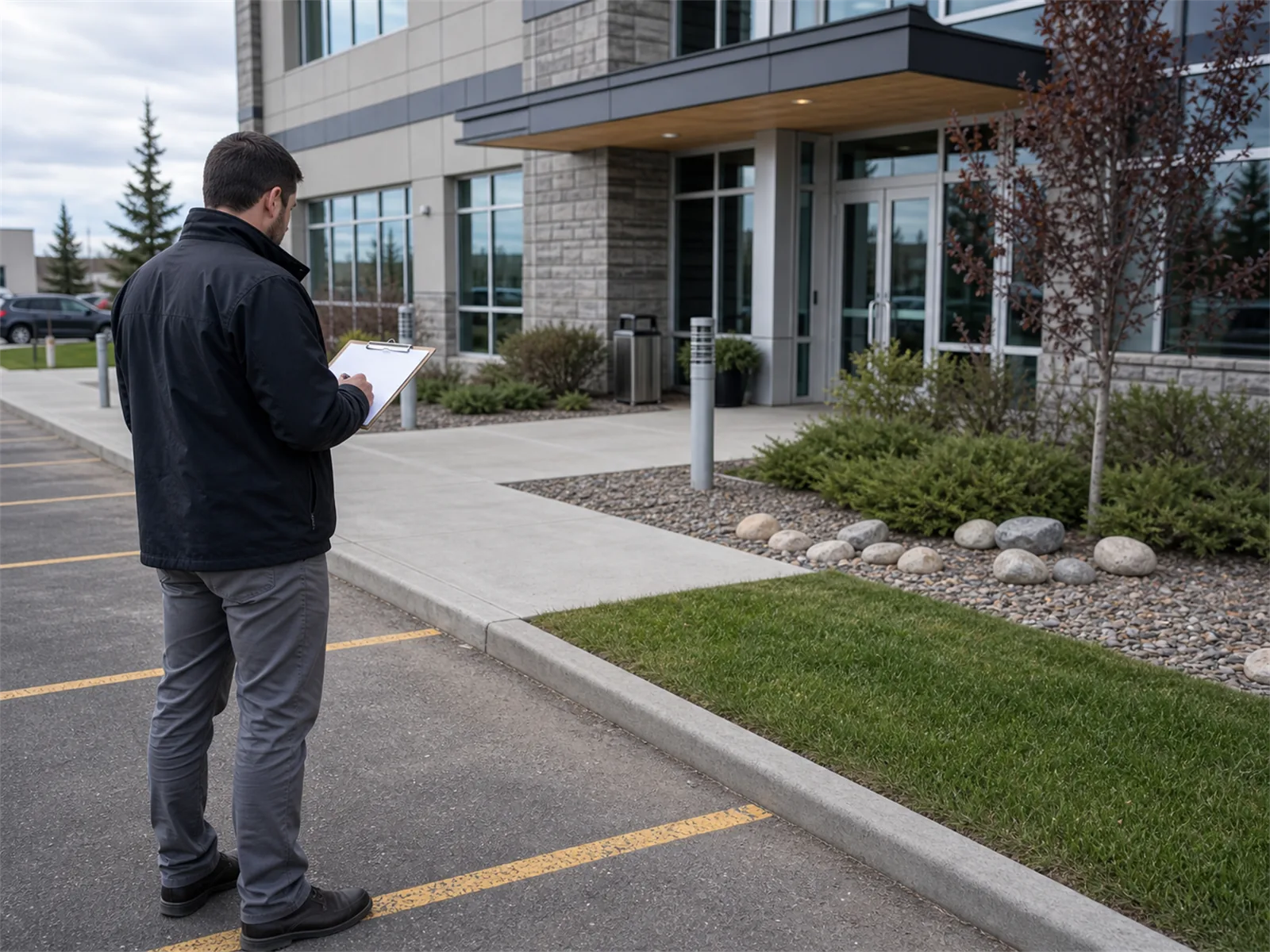
Walk the areas that tenants, customers, staff, and visitors see first. Entrances, signs, walkways, parking edges, garbage areas, and storefront approaches usually reveal whether the property feels managed or neglected.
This first pass should be practical rather than cosmetic. If a zone creates complaints, affects access, or shapes the first impression, it belongs near the top of the checklist.
- Main entrances, storefront approaches, and tenant walkways
- Parking lot edges, curbs, signs, islands, and garbage access
- Grass height, weeds, litter, gravel, leaves, and blown debris
Check turf, beds, shrubs, and edges
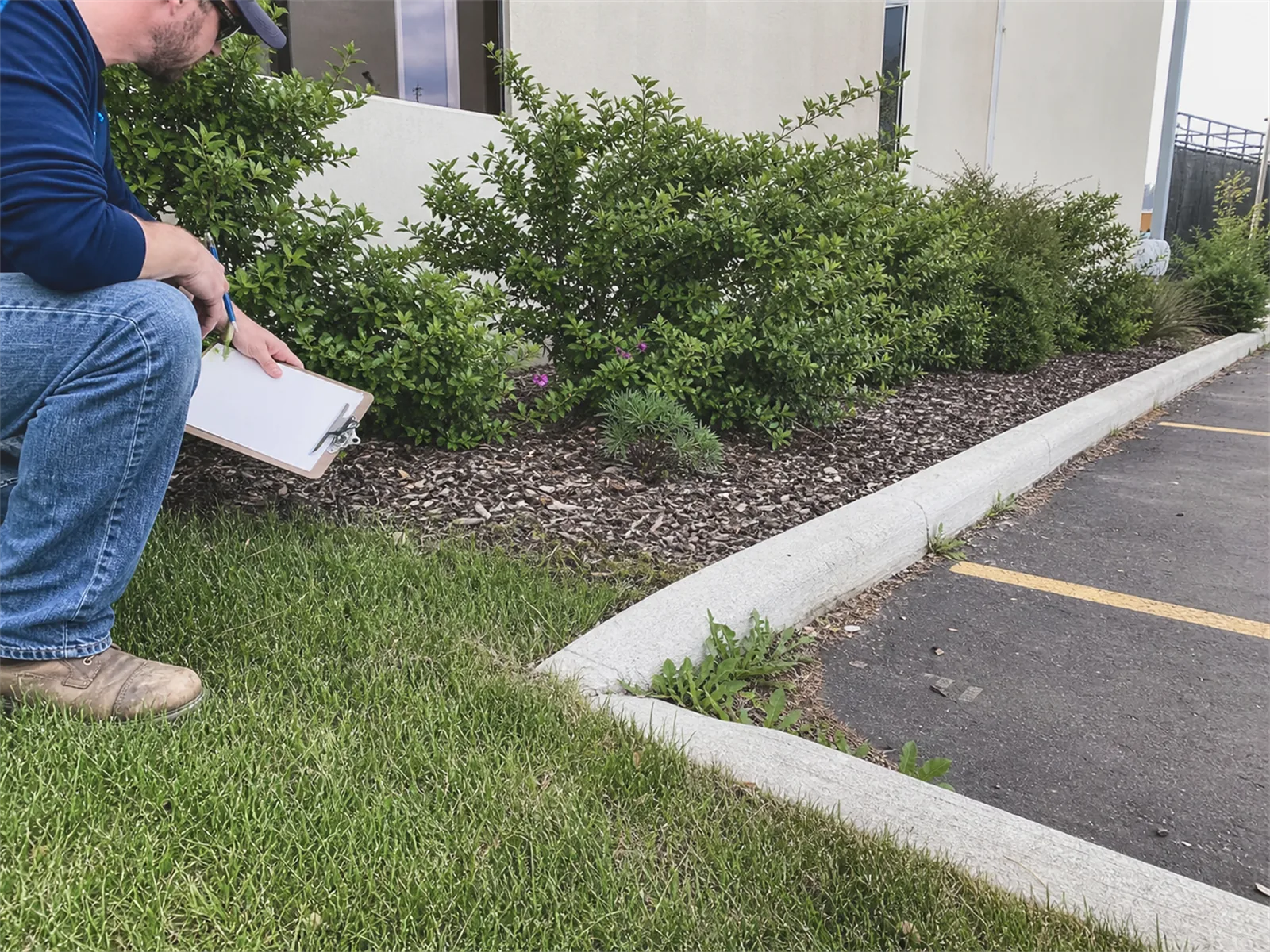
The main maintenance areas should be reviewed for both appearance and practicality. Look for patchy turf, overgrowth, weeds, damaged beds, tired mulch, blocked sightlines, and rough edges where parking lots meet grass or landscaping.
- Patchy turf, dry spots, overgrowth, weeds, and uneven mowing
- Bed cleanup, shrub trimming, mulch condition, and plant health
- Edges around sidewalks, curbs, fences, signs, and parking lots
Add seasonal and winter access notes
A Fort McMurray checklist should not stop at summer lawn care. Spring gravel, salt damage, fall debris, snow storage, drainage, and icy access points all affect how the property should be maintained through the year.
- Spring gravel, debris, salt damage, and turf recovery areas
- Fall leaves, final mowing, bed clearing, and snow-prep obstacles
- Snow storage zones, drains, entrances, walkways, and priority access routes

What to look at before you book
Before this turns into a quote request, walk the site the same way a tenant, customer, employee, or crew member would use it. The useful details are often practical: where people enter, where vehicles stack up, where snow or debris collects, and which areas look neglected first.
Use that pass to connect the visible condition to timing, access, service frequency, and the kind of exterior maintenance LawnSharks should price.
Turn the checklist into a quote-ready scope
Once the property is reviewed, turn the notes into a practical service scope. Clear photos, service frequency, priority zones, timing, access restrictions, and problem areas help LawnSharks review the work faster.
- Photos from wide, close, entrance, edge, and access angles
- Preferred service frequency, seasonal deadlines, and tenant concerns
- Locked areas, parking congestion, business hours, and contact details
Wide site views, entrances, turf, beds, parking edges, access points, and closeups of problem areas.
Service frequency, deadlines, business hours, tenant concerns, gates, parking limits, and seasonal priorities.