
Understand the estimate path
A good estimate request starts a review process, not a guessing game.
Start with the real-use areas of the property, then work outward to the spots that affect crew access, seasonal timing, and tenant or customer experience.
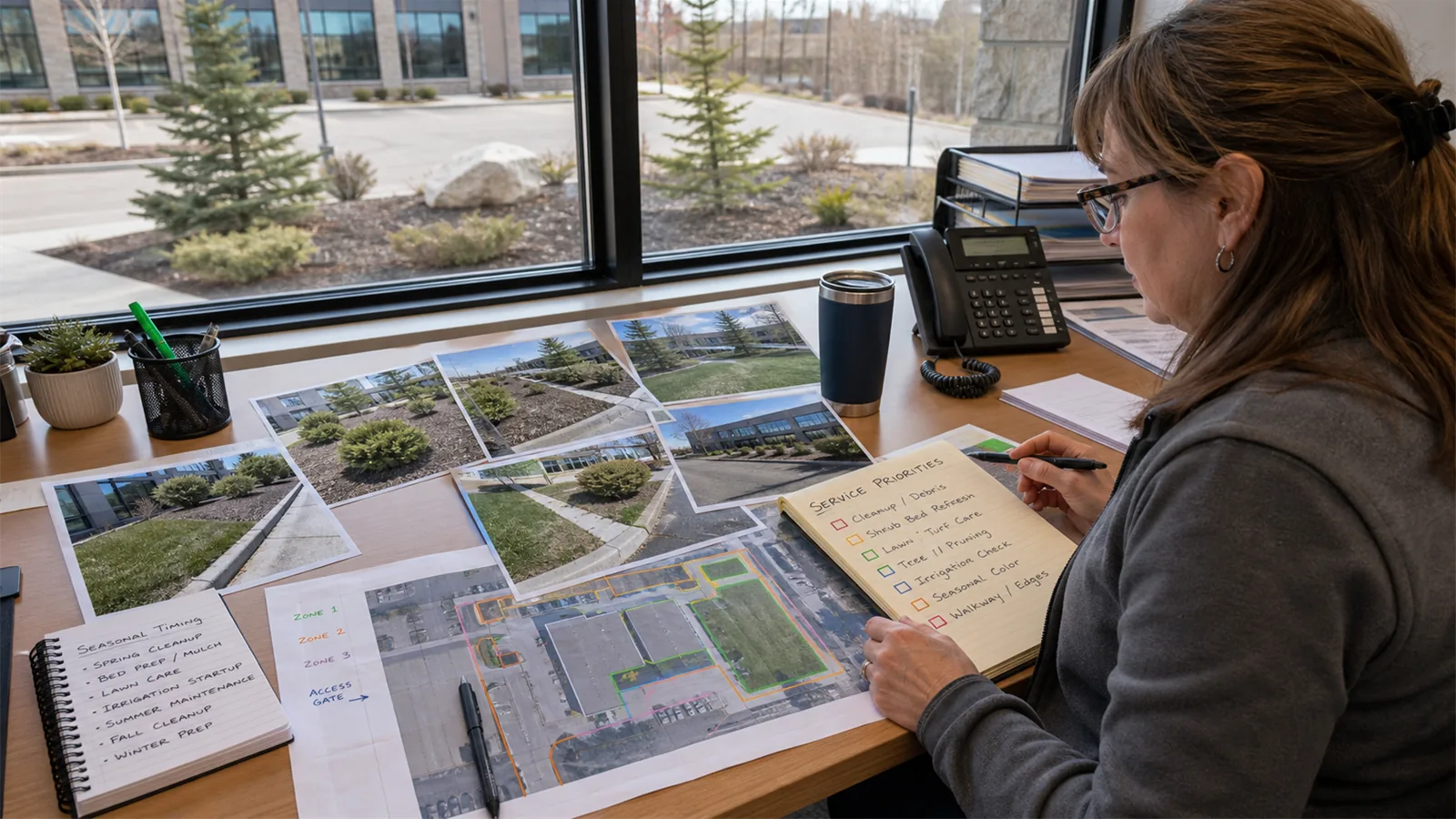
- Walk submitted photos, service zones, access points, timing notes, property type, and seasonal priorities
- Look for missing photos, unclear scope, inaccessible areas, and delays while basic details are confirmed
- Note whether the issue is urgent, seasonal, or recurring

Know what LawnSharks reviews first
A useful review does not stop at appearance. It also checks how vehicles move, how people enter, how weather changes the surface, and where crews may lose time.
For this topic, pay special attention to submitted photos, property type, service zones, timing, access, seasonal priorities, and unanswered scope questions.
- Check the customer, tenant, staff, or crew path
- Compare wide site views with close detail areas
- Mark places where the condition repeats after weather, traffic, or service visits

Prepare for follow-up or a walkthrough
After the site review, sort the work into reset items, recurring maintenance, seasonal planning, and anything that may need special access or follow-up. That keeps the estimate focused on the actual property instead of a generic service list.
- Reset work for areas that have already fallen behind
- Recurring care for conditions that will return without routine visits
- Seasonal timing for immediately after submitting the estimate request and before scheduling work
What changes the next step
The right next step depends on how much can be understood from the request. Photos, site notes, access details, service frequency, and the current condition of the property decide whether a quote can be prepared quickly or needs a walkthrough first.
Use that pass to connect the visible condition to timing, access, service frequency, and the kind of exterior maintenance LawnSharks should price.
Make approval and scheduling smoother
The best request gives LawnSharks enough detail to understand the site before pricing the work. A few clear photos and short notes can prevent extra back-and-forth and make a walkthrough more productive if one is needed.
- Send wide photos for layout, access, and scale
- Send close photos showing missing photos, unclear scope, inaccessible areas, and delays while basic details are confirmed
- Include timing, business-hour, tenant, parking, gate, and seasonal constraints
Use one wide photo for the whole area and close photos for the details that affect time, access, or finish standard.
Add timing, tenant concerns, business hours, parking limits, gates, and any seasonal pressure that changes the work.
